


In a world where every second counts and innovation reigns supreme, carbon fiber 3D printing is the superhero we didn’t know we needed. Imagine creating lightweight, durable parts that can withstand the test of time, all while sipping your morning coffee. Sounds like magic, right? Well, it’s not. It’s just the incredible fusion of carbon fiber and 3D printing technology, and it’s changing the game for industries everywhere.
From aerospace to automotive, this dynamic duo is making waves, proving that strength doesn’t have to come with extra weight. With carbon fiber 3D printing, designers can push boundaries, unleash creativity, and say goodbye to the days of bulky materials. So, buckle up and get ready to explore how this groundbreaking technology is revolutionizing the way we create. Who knew that the future of manufacturing could be so light and fun?
Overview of Carbon Fiber 3D Printing
Carbon fiber 3D printing uses a combination of carbon fiber and thermoplastics to create lightweight, strong parts. This technology enhances structural integrity, making it suitable for demanding applications in aerospace, automotive, and medical industries. Designers leverage precision to produce complex geometries that traditional manufacturing cannot achieve. The process enables rapid prototyping and customization, reducing production time and costs.
Advancements in carbon fiber filament allow for easy integration with existing 3D printers. Customers benefit from the flexibility to produce small to medium-sized components efficiently. The versatility of carbon fiber 3D printing extends to various applications, such as drones, vehicles, and specialized medical devices.
Material properties play a crucial role in the effectiveness of carbon fiber 3D printing. Carbon fiber-reinforced filaments exhibit significant strength-to-weight ratios compared to standard materials. Flexibility in design encourages engineers to experiment with composite structures, leading to innovative solutions.
Investing in carbon fiber technology can enhance a company’s competitive edge. Manufacturers achieve reduced material waste and streamlined workflows, contributing to sustainability efforts. Cost savings realized through lower shipping and handling further motivate businesses to adopt carbon fiber 3D printing processes.
In essence, carbon fiber 3D printing demonstrates a blend of creativity and functionality. As industries increasingly prioritize efficiency and performance, adoption rates continue to rise. The future landscape of manufacturing promises exciting advancements, with carbon fiber 3D printing at the forefront of innovation.
Benefits of Carbon Fiber 3D Printing
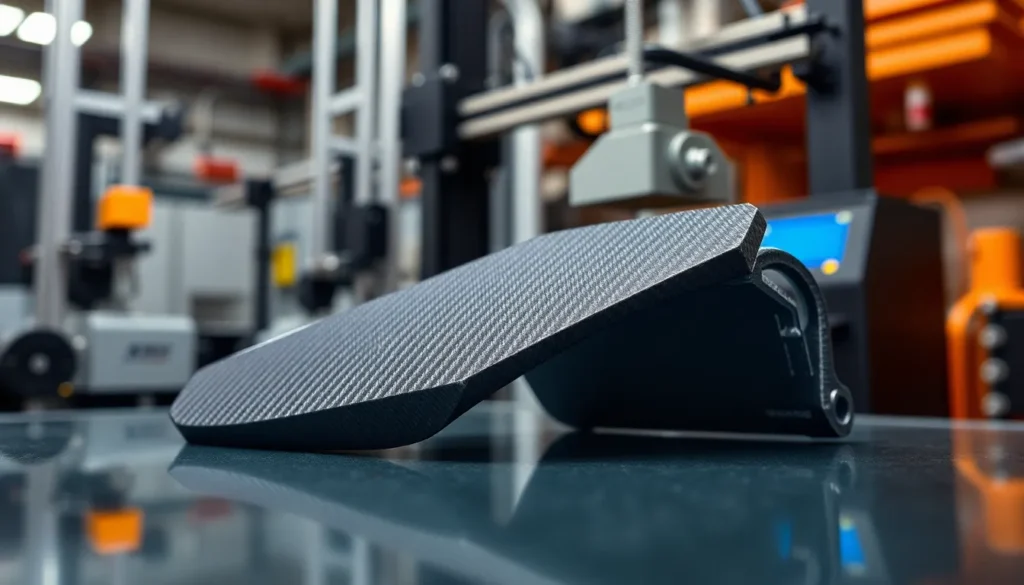
Carbon fiber 3D printing offers significant advantages, impacting various industries positively. This technology enhances product performance while reducing material costs.
Strength and Durability
Carbon fiber boasts remarkable strength and durability, making it ideal for demanding applications. It withstands high stress and minimizes deformation under load, outperforming many traditional materials. Parts produced using carbon fiber 3D printing exhibit superior impact resistance, crucial in environments like aerospace and automotive. The combination of carbon fiber and thermoplastic ensures lasting performance, making these components resistant to wear and fatigue over time. This enhanced durability not only improves product lifespan but also aligns with industries’ goals of reliability and safety.
Weight Reduction
Weight reduction remains a critical factor in many industries, especially aerospace and automotive. Carbon fiber 3D printed components significantly lower overall weight without sacrificing strength. Engineers favor this material for its excellent strength-to-weight ratio, allowing for lighter designs that improve fuel efficiency and performance. As products become lighter, transportation costs decrease while speed and agility increase. Carbon fiber’s lightweight nature opens doors to innovative designs that conventional materials cannot achieve, enabling accomplished performance in competitive markets.
Applications of Carbon Fiber 3D Printing
Carbon fiber 3D printing finds varied applications across several industries, enhancing performance, efficiency, and design capabilities. Its unique properties support advancements in fields such as aerospace, automotive, and consumer products.
Aerospace Industry
Aerospace relies heavily on carbon fiber 3D printing for its lightweight yet durable components. Engineers utilize this technology to create complex geometries that traditional methods cannot produce. Parts such as brackets, housings, and even structural elements benefit from reduced weight, which leads to improved fuel efficiency. Notably, carbon fiber components exhibit resistance to heat and fatigue, crucial for high-stress environments. This innovative approach accelerates prototyping and testing, enhancing design iterations while minimizing lead times. As companies strive for sustainability and performance, carbon fiber 3D printing plays a pivotal role in modern aerospace manufacturing.
Automotive Industry
In the automotive sector, carbon fiber 3D printing drives innovation with lightweight components that enhance vehicle performance. Manufacturers utilize this technology to create parts like interior brackets, custom tooling, and even exterior panels. Weight reduction from carbon fiber materials improves fuel efficiency and accelerates vehicle speeds, which appeals to both consumers and manufacturers. Moreover, the ability to rapidly prototype allows teams to test and refine designs promptly. Cost-effective production methods through additive manufacturing reduce waste compared to traditional manufacturing processes. As a result, automotive companies are increasingly adopting carbon fiber 3D printing to push boundaries in performance and efficiency.
Consumer Products
Consumer products benefit significantly from carbon fiber 3D printing, offering lightweight and robust solutions for various applications. Designers explore innovative products such as sports equipment, electronics casings, and custom accessories with enhanced performance characteristics. Carbon fiber’s strength and rigidity allow for the creation of stylish yet functional items. The flexibility in design encourages personalization and rapid prototyping, meeting diverse consumer demands more efficiently. Additionally, reduced manufacturing costs stemming from this technology enable companies to experiment with new product lines without substantial financial risk. Consequently, carbon fiber 3D printing becomes a game-changer in the consumer goods market, fostering creativity and competitive advantage.
Challenges in Carbon Fiber 3D Printing
Carbon fiber 3D printing presents several challenges that users must navigate to realize its full potential. Understanding these obstacles can help streamline the adoption process.
Cost Considerations
High initial investments characterize carbon fiber 3D printing. The cost of advanced printers and premium carbon fiber filaments can deter small businesses. Additionally, maintenance expenses for specialized equipment can accumulate quickly. Material pricing fluctuates significantly based on quality and supplier, making budgeting challenging. Significant expenses might lead companies to evaluate the return on investment carefully before committing resources to this technology.
Technical Limitations
Technical limitations also impact the effectiveness of carbon fiber 3D printing. Many standard 3D printers struggle to handle carbon fiber filaments without modifications. Printer upgrades may be necessary to ensure compatibility with abrasive materials. Layer adhesion issues often arise, requiring users to optimize print settings for different designs. The speed of the printing process can hinder large-scale manufacturing, causing delays in production timelines. Ensuring consistent quality across various applications demands advanced knowledge and skill.
Future Trends in Carbon Fiber 3D Printing
Emerging trends in carbon fiber 3D printing promise significant advancements across various sectors. Increased automation in printing processes allows for greater efficiency and precision, reducing lead times in production. Manufacturers are adopting hybrid technologies that merge carbon fiber printing with traditional techniques, enabling enhanced component properties.
Integration of artificial intelligence in design software streamlines the creation of complex geometries, allowing for innovative applications in aerospace and automotive sectors. Companies will leverage machine learning to optimize print settings, improving overall quality and reducing material waste. Furthermore, sustainable practices will take center stage, as biocomposite materials emerge that blend carbon fiber with eco-friendly components.
Investment in advanced materials is essential, as researchers develop new carbon fiber composites that enhance the strength-to-weight ratio even further. The automotive industry looks to utilize these advancements for lighter, more efficient vehicles that meet strict performance standards. Also, customization capabilities will expand, catering to specific customer needs swiftly and effectively.
Additive manufacturing is set to evolve, providing realtime analytics during printing. This increase in data-driven insights helps control processes dynamically, ensuring consistency and quality in each part produced. Additionally, collaboration among industries will foster innovation, allowing shared expertise to enhance carbon fiber 3D printing techniques.
As these trends unfold, carbon fiber 3D printing is poised to redefine manufacturing paradigms. The combination of sustainability, efficiency, and advanced material science will catalyze its widespread adoption, driving the future of diverse applications.
Carbon fiber 3D printing is revolutionizing manufacturing across diverse industries. Its lightweight and durable components are not just enhancing product performance but also encouraging innovative designs that were once impossible. As businesses embrace this technology, they’re discovering new efficiencies and sustainable practices that align with modern industry goals.
The future of carbon fiber 3D printing looks promising. With ongoing advancements in materials and automation, its potential to redefine manufacturing processes is immense. As industries continue to adapt, carbon fiber 3D printing will undoubtedly play a pivotal role in shaping the next generation of products, driving creativity and competitiveness in the market.

